Author: pauljenkins

  • Design Spotlight: Clip Point

    Design Spotlight: Clip Point

    A Brief History


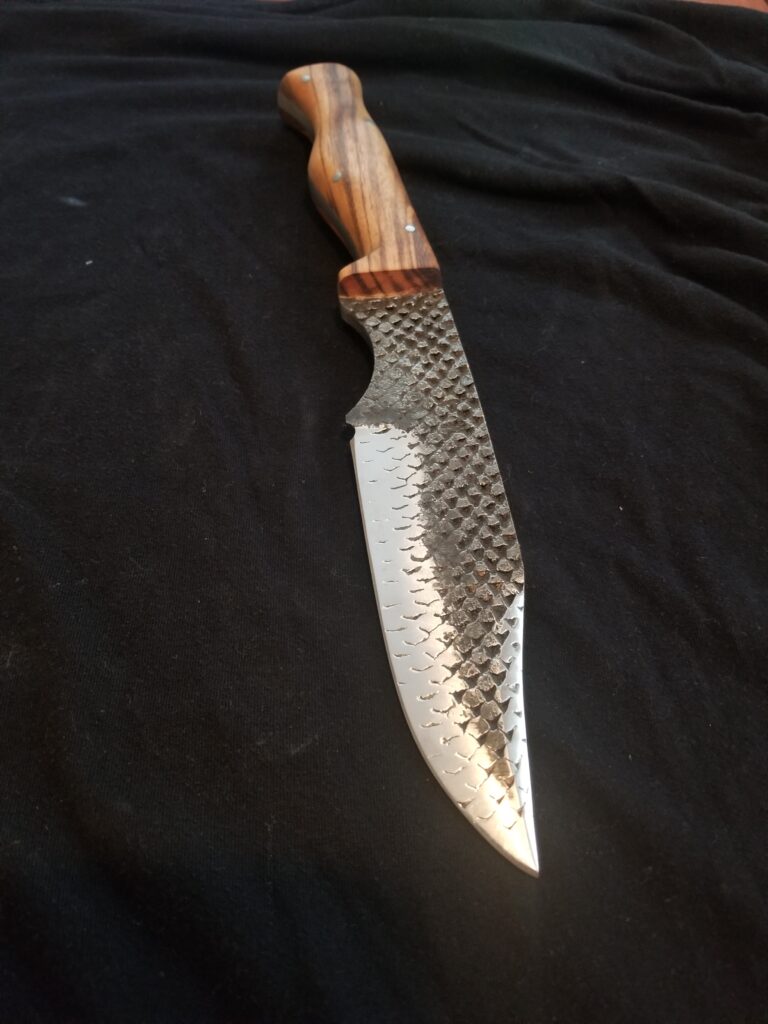
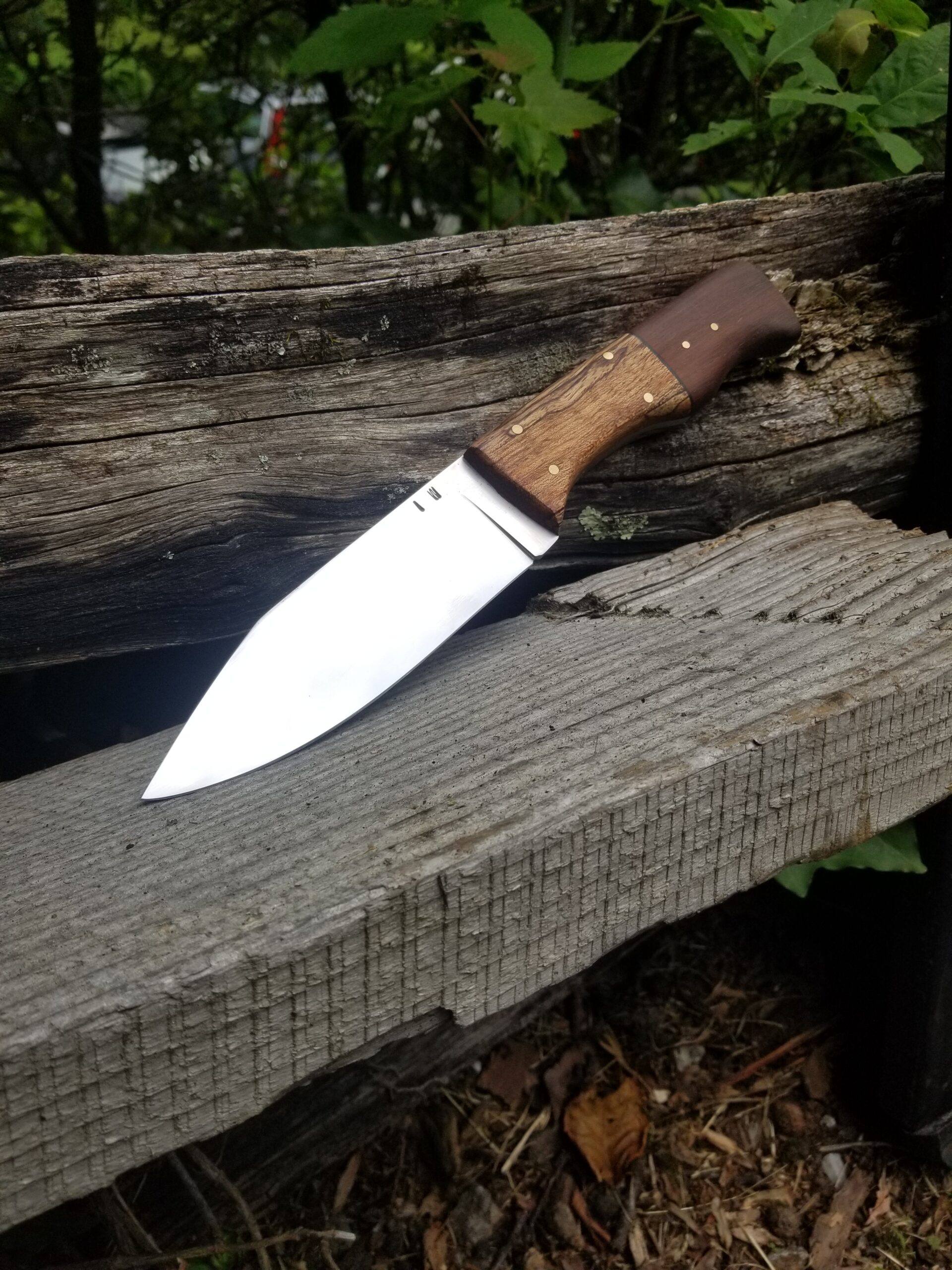
    It reasonable to say that almost as long as humans have been crafting edged implements, there has been some form of a clip point. The clip point as a knife design is more like an emergent truth than an invention that can be traced to a specific time and place. That’s how classic it is.

    Though it undoubtedly existed in various forms throughout history, it was in 19th-century America that the clip point became truly iconic and took on the form we mimic to this day. Frontiersmen sought a blade that excelled at both skinning game and thrusting in close quarters. Legend credits Rezin P. Bowie and his brother James with popularizing the design through the famous Bowie knife, which featured a pronounced clipped point for enhanced penetration.

    More recently, the U.S. Marine Corps adopted a clip-point fighting knife, the iconic KA-BAR, during World War II—cementing the blade shape’s reputation for reliability in combat. Military and civilian users alike have adopted the shape, and it remains a staple in modern knife catalogs worldwide.

    Anatomy and Design

    A clip point is so powerful and versatile for a few basic reasons:

    • The “clip” removes mass towards the tip, bringing the spine and edge together acutely
    • For a knife intended for combat, that “clip” can be sharpened into a sharp/semi-sharp edge
    • The design still allows for a deep belly and up-swept tip that has plenty of slicing power
    • A clip point brings the tip closer to the center of the blade’s axis, an aid for fine control work or caping

    Function and Use Cases

    Clip point blades shine when you need:

    • Precise pierce ability—perfect for field dressing or piercing tough targets
    • Long slicing curves—ideal for cutting meat, rope, or vegetation
    • Fine-detail work—thanks to the narrow, often centered, and controllable tip

    Whether you’re dressing game on a back-country hunt or tackling day-to-day tasks around camp, the clip point delivers a dependable balance of edge length and tip finesse.

    Crafting Considerations

    When forging or grinding a clip point, pay attention to:

    • Clip height: a higher clip yields a thinner tip but reduces belly length
    • Tip thickness: keep enough mass to resist breakage while achieving fine piercing geometry. The proper balance depends on the intended purpose.
    • Grind style: flat or convex grinds work best on the clip, preserving strength and ease of sharpening
    • Tempering: a balanced temper (around HRC 58–60 for high-carbon steels) ensures a tip hard enough to hold an edge yet tough enough to withstand impact

    In terms of designs with pedigree, clips points have it in spades. They are common to the point of being taken for granted. Famous examples like the Bowie or Ka-bar knives make for great stories, but clip points equally belong in the pocket, on the cutting board, and in the great outdoors.

  • Leather & Alternative Sheath Materials

    Leather & Alternative Sheath Materials

    Process of Making Leather

    Like wood or bone, leather was once alive. Leather can be and often is made from the skin of all sorts of animals including sharks, ostriches and less exotically, deer or bear. But the vast majority of leather produced in the world comes from cattle.

    Read more: Leather & Alternative Sheath Materials

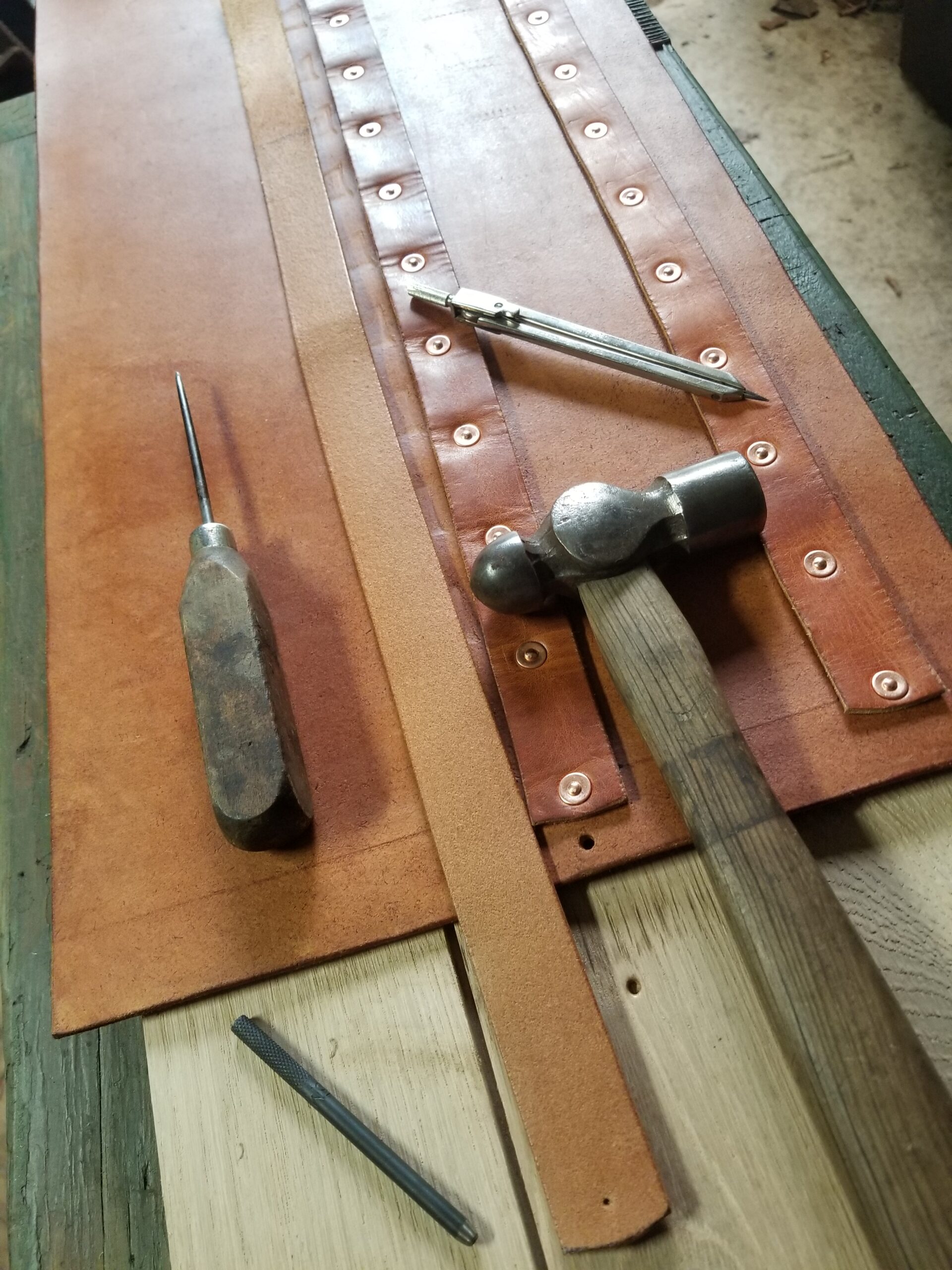
    Making vegetable tanned leather is a process of organic alchemy, transforming raw hide into a thing of durability and luxury. Vegetable tanning is a process of stabilizing the proteins (collagen) in the hide with tannins that occur in nature. Tannins are traditionally sourced from wood or tree bark extracts, chestnut and oak most notably. It can take weeks of steeping in these tannin-rich extracts as the tannin slowly transforms the collagen into stable, rot-resistant leather. After tanning the leather goes through a drying and finishing process, and it may be shaved or split to create different types of leather, depending on its intended purpose.

    Tanning

    Vegetable tanning stands heads and shoulders above chrome tanning when it comes to make knife sheaths. The long infusion of natural tannins binds firmly with collagen, creating leather that breathes, ages gracefully, and develops a deep patina under use. Veg-tanned leather also maintains a slightly alkaline interior pH, which keeps steel blades safe from acidic degradation. By contrast, chrome-tanned leather—treated in mere hours with chromium salts—can contain residual chromium and acidic byproducts that leach over time, risking micro-pitting and corrosion on high-carbon edges.

    Types of Leather

    • Full-Grain: Topmost layer of the hide with nothing removed except the hair. It is the gold standard for quality leather. Extremely durable and breathable and the most expensive.
    • Top-Grain: Sanded to remove flaws, thinner and more uniform than full-grain but slightly less robust. Generally smooth and firm but does not need to be “broken in” like full grain.
    • Nubuck: A type of top-grain leather –just the upper, most durable layers of the hide are removed and sanded to create a velvety nap. More durable than suede. Ideal for premium work boots for example.
    • Split Grain & Suede: Made from the lower, less durable layers of the hide, buffed and embossed or napped; cost-effective but less durable. Highly susceptible to water spotting. Suited for fashion purposes and some bags.

    Summary of Quality & Performance

    Full-grain leather, has the highest tensile strength and retains the natural grain structure. It resists wear and puncture better than any other grade, making it the gold standard for robust knife sheaths. Top-grain leather removes only the very surface imperfections, trading a measure of toughness for uniformity and ease of dyeing. Split leathers and suede varieties occupy a budget tier—buffed and embossed to mimic grain—but they lack the fiber density to hold stitching under repeated flex. Nubuck is more durable than suede, but neither leather type is well suited to knife sheaths and they are both vulnerable to moisture.

    Physical Properties

    Full-grain leather is incredibly durable and built to last, standing up to scratches, scuffs, and heavy use without falling apart. It has incredible flex-endurance, bending again and again without cracking or losing shape. Stitches and metal rivets grip leather fibers tightly, so seams stay secure even under stress. Leather can be formed to shape by hand and pressure to some extent. It also responds beautifully to heat and moisture: when dampened and gently warmed, it becomes pliable enough to mold over a form. As it dries, it hardens into that new shape, locking in a snug, form-fitting sheath.

    As you handle and expose leather to healthy doses of light, heat, and moisture, it develops a warm, glossy patina that ages like fine wine. This natural aging process not only adds beauty but also makes each sheath uniquely yours.

    Care & Maintenance

    Leather demands respect but rewards it generously. Leather can operate in all sorts of rugged conditions, leather’s bane is neglect. After each outing, if the sheath is dirty, wipe it with a dry cloth to remove grit and surface moisture. Occasional conditioning replenishes oils that were stripped through friction or UV expsoure. This preserves the stitch integrity and suppleness. Avoid fully drenching the leather sheath if at all possible. Prolonged moisture invites mold and fiber swelling. If it gets wet, allow to dry naturally at room temperature. Alternately, extremely dry conditions can lead to cracking. As long as it is dried after it get wet, and occasionally conditioned if it shows signs of drying, leather is forgiving and incredibly hardy. It develops a character over time and with use that can only be paralleled by wood.

    Comparing Sheath Materials

    Leather

    Few materials match leather’s blend of classic luxury, organic warmth, and personalized patina. Full-grain veg-tanned leather molds to each blade over time, just like a really good pair of leather shoes. Durability is legendary: minor scuffs buff out, stitches are heroically strong and seams can be restitched if they ever fail or are cut. That said, like any natural material that was once alive, there is variability and some susceptibility to decay at the extremes. In most outdoor applications leather performs admirably. In extreme or marine conditions where the sheath may spend long periods wet, or exposed to harsh chemicals, synthetic materials have clear advantages. But in most circumstances, leather has an incredible blend of traditional beauty and character and durability. With a bit of love and care, leather will last decade after decade.

    Kydex

    Thermoformed Kydex excels in zero-maintenance harsh conditions. Its polymer matrix shrugs off water, mud, and salt—perfect for maritime or utility knives. This material is virtually indestructible under normal field use, but noisy on draw and return, with a plasticky feel that some find sterile. Form-fit is achieved through precise molding, yet cannot self-adjust over time. Aesthetically, Kydex offers color and texture options—Camouflage patterns, special tints—but lacks the tactile depth and evolving character of leather.

    Cordura

    Cordura fabrics stake their claim on flexibility and lightness. These tear-resistant nylon fabrics create sheaths with minimal bulk and can be treated with water-repellent coatings that are more resistant to moisture than leather. Stitching is durable with heavy use and the draw is nearly silent. Cordura will never mold to a knife the way leather does. Aesthetically, Cordura is rugged and utilitarian.

    Wood

    Wooden sheaths evoke timeless tradition—oak, walnut, or exotic veneers that have been carved, glued and/or pinned to form a sheath. Durability hinges on the type of wood and its thickness, and the finish. Sealed properly, wood can be quite resistant to rain and dirt; unsealed, it warps and splits. The form-fit can be precisely carved, but once carved it is inflexible. Wood has exceptional warmth and character as far as sheaths go, especially when the grain is showcased. It is well suited for chef knives or collector knives rather than knives meant to be carried at the hip and put to work in the field.

  • Blacksmith’s Old Friend

    Blacksmith’s Old Friend

    The 10-Series Carbon Steels

    10-Series Carbon Steel:

    History

    Plain-carbon steel has been around since antiquity, but the 10-series crystallized in early 20th-century American alloys. Mills standardized these grades to give tool makers, knife smiths, and engineers a predictable baseline.

    During World War II, 1095 gained fame in bayonets and field knives for its razor potential, while 1045 proved a workhorse in mechanical parts and farm tools. Post-war civilian knife makers embraced 1084 for its balance of toughness and edge holding.

    Read more: Blacksmith’s Old Friend

    Alloy

    The 10-series steels are plain-carbon grades defined by the American Iron and Steel Institute. Their designation “10XX” signals carbon content roughly equal to “XX” hundredths of a percent. We’ll examine four staples:

    GradeCarbon Content (%)Manganese (%)Silicon (%)Phosphorus (max %)Sulfur (max %)
    10450.43–0.500.60–0.900.15–0.350.040.05
    10550.52–0.600.60–0.900.15–0.350.040.05
    10840.80–0.930.40–0.600.15–0.350.040.05
    10950.90–1.030.30–0.500.15–0.350.040.05

    These simple chemistries translate directly into predictable hardness, toughness, and edge retention as carbon climbs.

    Physical Properties

    All four grades share a density around 7.85 g/cm³ and thermal conductivity near 50 W/m·K. Key mechanical distinctions appear in tensile strength and hardness after proper heat treatment:

    GradeTensile Strength (UTS, ksi)Rockwell C (HRC) Hardened RangeImpact Toughness
    104575–8545–50High
    105585–9550–55Moderate-High
    1084110–13055–58Moderate
    1095115–14057–62Lower

    As carbon content increases, tensile strength and potential hardness climb, but impact toughness steps down.

    Application and Functional Uses

    • 1045: Gears, shafts, axles, and bolsters—where strength and moderate hardenability suffice.
    • 1055: Heavy-duty blades and machetes, prized for a blend of edge retention and resilience.
    • 1084: General-purpose knives, kitchen blades, and chisels; a smith’s favorite for its forgiving heat treatment.
    • 1095: Hunting and survival knives where maximum hardness and edge retention are paramount, despite a slightly more brittle nature.

    Heat Treatment

    1. Normalization Bring to 1526–1580 °F, air cool. Refines grain, relieves stresses.
    2. Austenitizing Raise to 1436–1508 °F. Hold 10–15 minutes per 1 inch of thickness.
    3. Quenching 1045/1055: Oil quench; moderate hardness, lower distortion. 1084/1095: Brine or fast oil quench to maximize hardness (but watch for cracks).
    4. Tempering 302–392 °F for knives; higher for tools. Tailor to desired Rockwell C range.

    Normalization

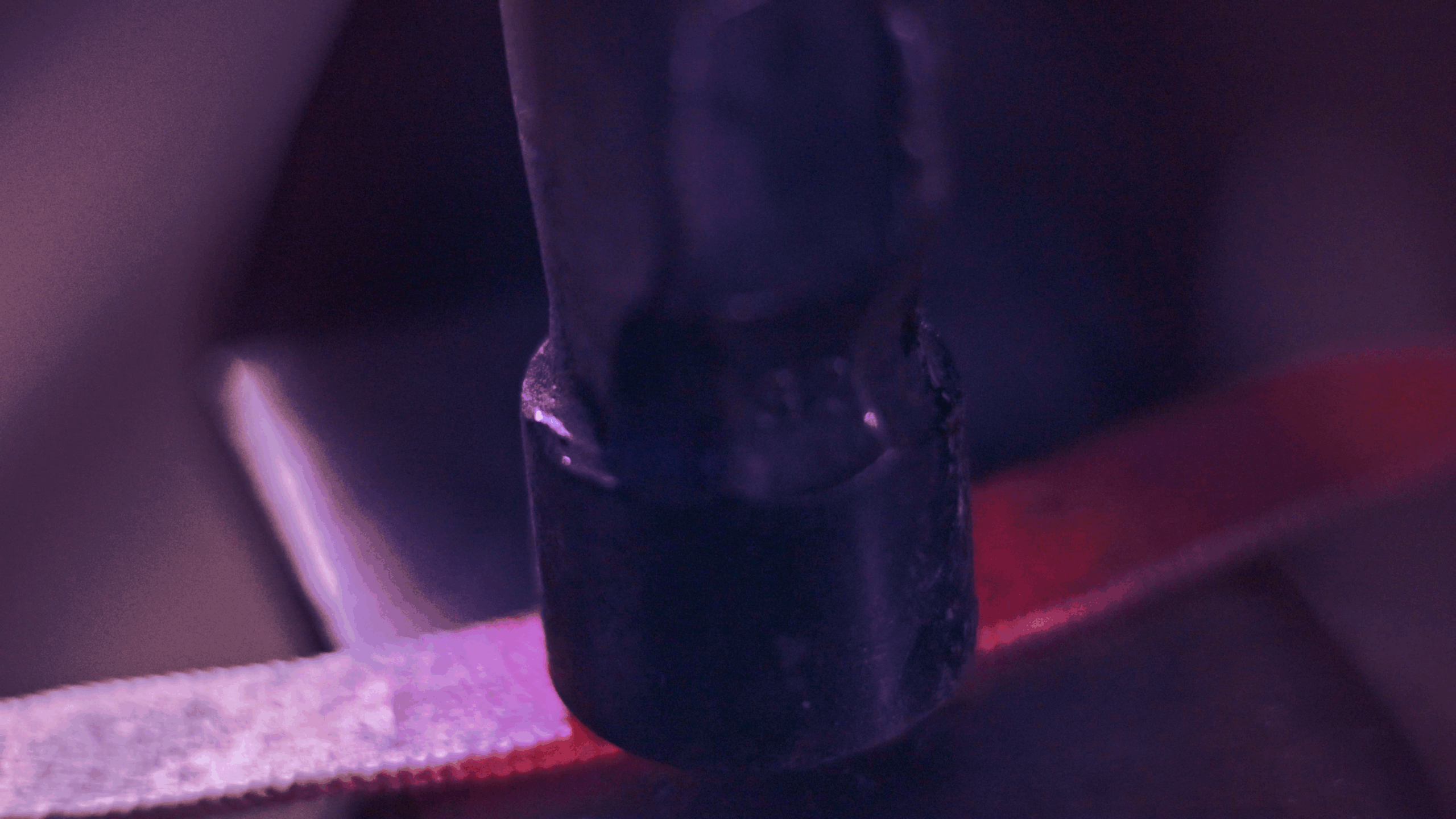
    Heating steel to 1526–1580 °F opens its crystal lattices, allowing dislocations and deformed grain boundaries to realign. As it air-cools, the steel’s microstructure refines into uniform, equally distributed grains. This process relieves stresses introduced by forging or welding, preventing warping and cracking during later heat treatment. Think of it as giving the steel a reset—an even playing field before you build hardness.

    Austenitizing

    Raising the steel to 1436–1508 °F transforms its ferrite and pearlite into austenite, a face-centered cubic phase that can dissolve carbon evenly. Holding this temperature for 10–15 minutes per inch of thickness ensures full transformation throughout the cross-section. You’re essentially charging the steel with dissolved carbon, preparing it to lock in hardness when it cools rapidly. Consistent soak time here avoids soft spots and guarantees even properties from edge to spine.

    Quenching

    Once fully austenitic, the steel plunges into oil or brine. Lower-carbon alloys like 1045/1055 merit a moderate oil quench, balancing hardness with minimal distortion. Higher-carbon grades such as 1084/1095 demand a faster medium—brine or quick-flow oil—to trap carbon in a martensitic structure for maximum hardness. The rapid cool must be controlled: too slow invites soft ferrite, too fast risks cracks. Mastering quench speed is where science meets the smith’s feel.

    Tempering

    Freshly quenched steel is hard but brittle—prime for snapping. Tempering at 300–400 °F for knives (and higher for hammers or chisels) relaxes internal stresses and converts some martensite into tempered martensite or troostite. Adjust the temperature and time to dial in your target Rockwell C hardness: lower temps preserve edge retention; higher temps boost toughness. Multiple temper cycles deepen uniformity, ensuring your blade takes punishment without shattering.

    Care and Maintenance

    Regular cleaning and oiling prevent rust on these non-stainless steels. A thin coat of mineral or camellia oil after wiping off moisture keeps iron oxide at bay. Avoid leaving them in back-pocket holsters or damp environments.

    Sharpen with coarse diamond or water stones; 1095 responds best to finer grits once initial burr is formed. Store in dry sheaths or blade rolls that breathe.