
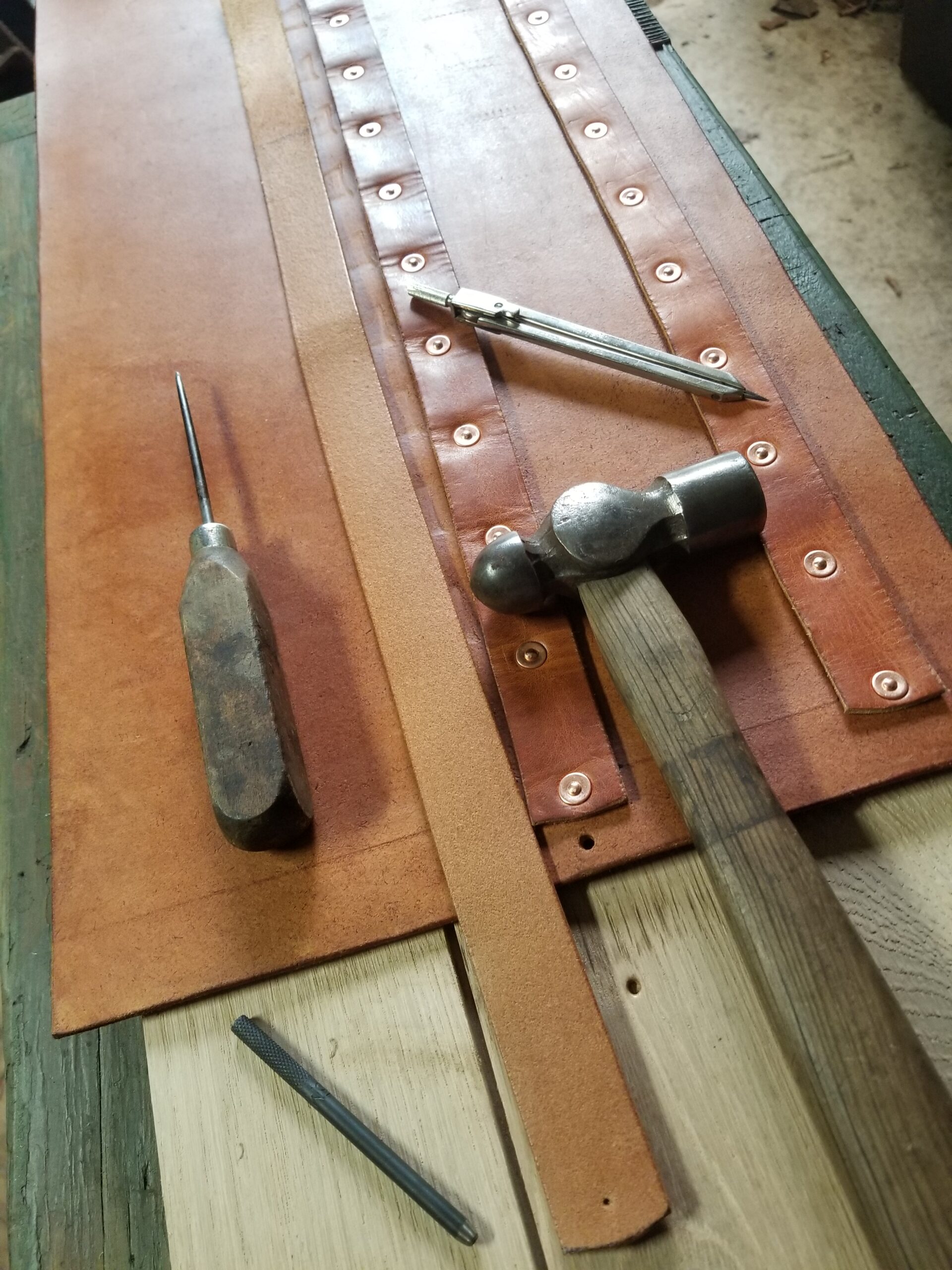
Process of Making Leather
Like wood or bone, leather was once alive. Leather can be and often is made from the skin of all sorts of animals including sharks, ostriches and less exotically, deer or bear. But the vast majority of leather produced in the world comes from cattle.
Read more: Leather & Alternative Sheath MaterialsMaking vegetable tanned leather is a process of organic alchemy, transforming raw hide into a thing of durability and luxury. Vegetable tanning is a process of stabilizing the proteins (collagen) in the hide with tannins that occur in nature. Tannins are traditionally sourced from wood or tree bark extracts, chestnut and oak most notably. It can take weeks of steeping in these tannin-rich extracts as the tannin slowly transforms the collagen into stable, rot-resistant leather. After tanning the leather goes through a drying and finishing process, and it may be shaved or split to create different types of leather, depending on its intended purpose.
Tanning
Vegetable tanning stands heads and shoulders above chrome tanning when it comes to make knife sheaths. The long infusion of natural tannins binds firmly with collagen, creating leather that breathes, ages gracefully, and develops a deep patina under use. Veg-tanned leather also maintains a slightly alkaline interior pH, which keeps steel blades safe from acidic degradation. By contrast, chrome-tanned leather—treated in mere hours with chromium salts—can contain residual chromium and acidic byproducts that leach over time, risking micro-pitting and corrosion on high-carbon edges.
Types of Leather
- Full-Grain: Topmost layer of the hide with nothing removed except the hair. It is the gold standard for quality leather. Extremely durable and breathable and the most expensive.
- Top-Grain: Sanded to remove flaws, thinner and more uniform than full-grain but slightly less robust. Generally smooth and firm but does not need to be “broken in” like full grain.
- Nubuck: A type of top-grain leather –just the upper, most durable layers of the hide are removed and sanded to create a velvety nap. More durable than suede. Ideal for premium work boots for example.
- Split Grain & Suede: Made from the lower, less durable layers of the hide, buffed and embossed or napped; cost-effective but less durable. Highly susceptible to water spotting. Suited for fashion purposes and some bags.
Summary of Quality & Performance
Full-grain leather, has the highest tensile strength and retains the natural grain structure. It resists wear and puncture better than any other grade, making it the gold standard for robust knife sheaths. Top-grain leather removes only the very surface imperfections, trading a measure of toughness for uniformity and ease of dyeing. Split leathers and suede varieties occupy a budget tier—buffed and embossed to mimic grain—but they lack the fiber density to hold stitching under repeated flex. Nubuck is more durable than suede, but neither leather type is well suited to knife sheaths and they are both vulnerable to moisture.
Physical Properties
Full-grain leather is incredibly durable and built to last, standing up to scratches, scuffs, and heavy use without falling apart. It has incredible flex-endurance, bending again and again without cracking or losing shape. Stitches and metal rivets grip leather fibers tightly, so seams stay secure even under stress. Leather can be formed to shape by hand and pressure to some extent. It also responds beautifully to heat and moisture: when dampened and gently warmed, it becomes pliable enough to mold over a form. As it dries, it hardens into that new shape, locking in a snug, form-fitting sheath.
As you handle and expose leather to healthy doses of light, heat, and moisture, it develops a warm, glossy patina that ages like fine wine. This natural aging process not only adds beauty but also makes each sheath uniquely yours.
Care & Maintenance
Leather demands respect but rewards it generously. Leather can operate in all sorts of rugged conditions, leather’s bane is neglect. After each outing, if the sheath is dirty, wipe it with a dry cloth to remove grit and surface moisture. Occasional conditioning replenishes oils that were stripped through friction or UV expsoure. This preserves the stitch integrity and suppleness. Avoid fully drenching the leather sheath if at all possible. Prolonged moisture invites mold and fiber swelling. If it gets wet, allow to dry naturally at room temperature. Alternately, extremely dry conditions can lead to cracking. As long as it is dried after it get wet, and occasionally conditioned if it shows signs of drying, leather is forgiving and incredibly hardy. It develops a character over time and with use that can only be paralleled by wood.
Comparing Sheath Materials
Leather
Few materials match leather’s blend of classic luxury, organic warmth, and personalized patina. Full-grain veg-tanned leather molds to each blade over time, just like a really good pair of leather shoes. Durability is legendary: minor scuffs buff out, stitches are heroically strong and seams can be restitched if they ever fail or are cut. That said, like any natural material that was once alive, there is variability and some susceptibility to decay at the extremes. In most outdoor applications leather performs admirably. In extreme or marine conditions where the sheath may spend long periods wet, or exposed to harsh chemicals, synthetic materials have clear advantages. But in most circumstances, leather has an incredible blend of traditional beauty and character and durability. With a bit of love and care, leather will last decade after decade.
Kydex
Thermoformed Kydex excels in zero-maintenance harsh conditions. Its polymer matrix shrugs off water, mud, and salt—perfect for maritime or utility knives. This material is virtually indestructible under normal field use, but noisy on draw and return, with a plasticky feel that some find sterile. Form-fit is achieved through precise molding, yet cannot self-adjust over time. Aesthetically, Kydex offers color and texture options—Camouflage patterns, special tints—but lacks the tactile depth and evolving character of leather.
Cordura
Cordura fabrics stake their claim on flexibility and lightness. These tear-resistant nylon fabrics create sheaths with minimal bulk and can be treated with water-repellent coatings that are more resistant to moisture than leather. Stitching is durable with heavy use and the draw is nearly silent. Cordura will never mold to a knife the way leather does. Aesthetically, Cordura is rugged and utilitarian.
Wood
Wooden sheaths evoke timeless tradition—oak, walnut, or exotic veneers that have been carved, glued and/or pinned to form a sheath. Durability hinges on the type of wood and its thickness, and the finish. Sealed properly, wood can be quite resistant to rain and dirt; unsealed, it warps and splits. The form-fit can be precisely carved, but once carved it is inflexible. Wood has exceptional warmth and character as far as sheaths go, especially when the grain is showcased. It is well suited for chef knives or collector knives rather than knives meant to be carried at the hip and put to work in the field.