
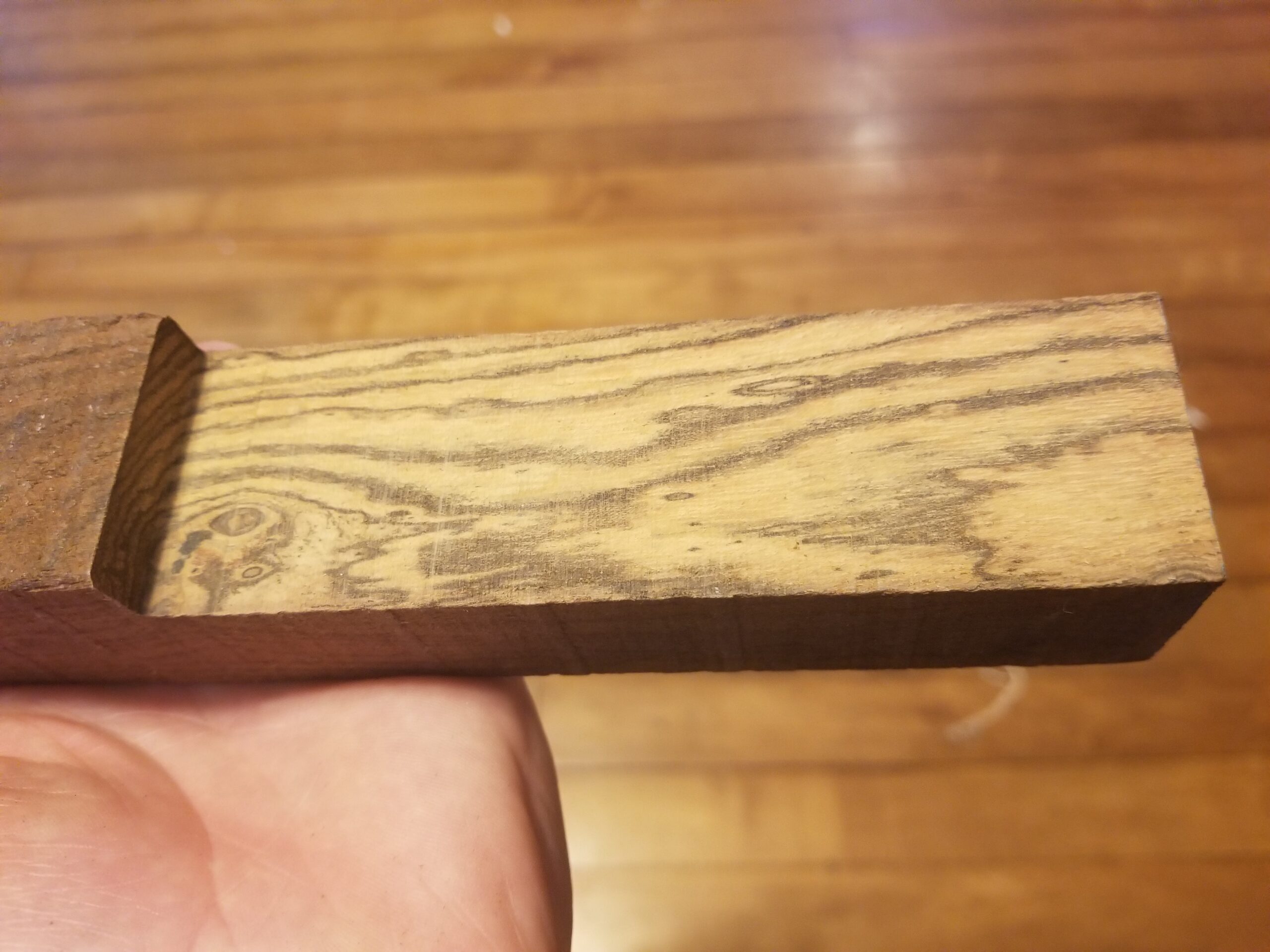
Physical Appearance
Bocote is instantly striking. Its base hues range from bright yellow and straw to warm golden brown, overlaid with chaotic swirls of chocolate-brown and jet-black streaks. These bold contrasts form irregular, eye-catching patterns—often resembling rippling water or topographical maps. The wood’s texture is medium-fine and uniform, offering a smooth canvas for finishing. No two boards look alike, making every handle a one-of-a-kind piece.
Geography & Sustainability
True to its common name “Mexican Rosewood,” Bocote (Cordia spp., not a true member of the rosewood family) thrives in tropical and subtropical forests of Mexico and Central America. Mature trees tower between 65 and 100 feet, drawing nutrients from limestone soils and seasonal rainfall. Many mills source Bocote under strict sustainability programs, ensuring healthy regeneration and responsible harvesting.
History
Cordia species have long been valued by indigenous craftsmen for their beauty and workability. Spanish explorers dubbed it “Bocote,” borrowing from local languages to reflect its smoky, burl-like figure. Over centuries, it adorned musical instruments, furniture inlays, and ceremonial artifacts. In modern knife making, Bocote rose to prominence in the boutique scene for its vibrant aesthetics and durable nature, gracing everything from chef’s knives to custom-made gentleman’s folders.
Physical Properties
While prized for looks, Bocote also delivers on performance:
- Density: Approximately 0.75–0.85 g/cm³, lending substantial heft and balance to handles.
- Hardness: 1,300–1,600 lbf on the Janka scale, making it resistant to dents and dings.
- Stability: Moderate natural oils offer dimensional stability, though it responds well to sealers and stabilizing resin.
- Workability: Cuts cleanly with sharp tools but demands sharp cutters to avoid tear-out along the pronounced grain.
This combination of density and stability makes Bocote ideal for knife handles that need to stand up to rigorous daily use.
Care and Maintenance
To preserve Bocote’s high-contrast figure:
- Wipe handles with a soft cloth after use to remove oils and moisture.
- Apply a thin coat of natural drying oil (e.g., tung, Danish or boiled linseed) every 3–6 months to nourish wood and repel moisture.
- Limit prolonged sun exposure—UV rays accelerate the shift from yellow-brown to a more uniform, darker hue.